Premier Blog Sponsor: Top of Blog; All Pages

Disclaimer

DISCLAIMER:

I do not read every book/author I spotlight or book tour I host!
Readers, Please research and use wisdom before buying

*As an Amazon Associate I earn from qualifying purchases.*

Showing posts with label audra jennings pr. Show all posts

Wednesday, August 10, 2022

#WednesdayWordswithFriends Welcomes @CarolynMAuthor Carolyn Miller!

Good Morning Again, Friends!

Today's guest is not new to our blog but always a pleasure to have, so please welcome Carolyn Miller back as she shares her heart with us.

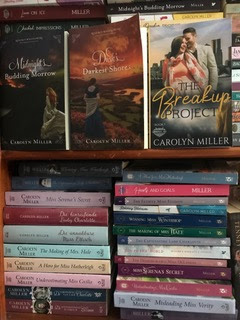
When I first started seeing my books published back in 2017, I was told that whatever I first published would become what I’m ‘known for,’ and I’d need to put the other books I’d written on the back burner. I did this for four years, establishing myself as a Regency author, but then, as the Winter Olympics drew near, and knowing I had a contemporary winter Olympics story ready to go, wondered about venturing into the contemporary fiction market too. After a few knockbacks and a LOT of hard work, I saw that Winter Olympics book, Love on Ice, release as part of a contemporary romance series, just in time for the Winter Olympics earlier this year.

It can be easy to limit ourselves, to think we need to fit inside the box of other people’s expectations, or what our own experience says can be done. I touched on this in my recent historical release, Midnight’s Budding Morrow, where a marriage of convenience elevates a humble woman from a perceived servant role to ‘lady of the manor’, leaving certain people shocked at Sarah’s audacity, before coming to realize just how effective and honorable she was in her new role. 

I think this can prove true as an author, too, when we’re told to write only a ‘certain’ type of book, or write for a certain audience, or in a certain way. I’ve now got over 20 books published, a mix of historical and contemporary, and I’m so glad I didn’t just stick with what some people thought I should. It’s fantastic to see God touching hearts through my hockey books as well as my historicals, that these stories God puts on my heart don’t need to be for me alone but can be shared with a wider audience (all the way to Germany and beyond!).

I like giving characters opportunities to push past the perceived limitations, to surprise others with the way they handle new and daring situations, just like Sarah has to in Midnight’s Budding Morrow. Her husband is another who confounds the critics, with his new faith a far cry from his rakish past. I love a good redemption story, and many readers have testified about how good it was to see realistic, authentic characters they could connect with, that it wasn’t just the easy, ‘check-the-boxes’ kind of story. 

Our world is full of people who deliberately chose to do things differently, to not accept the status quo, or be limited by their past. Imagine if Joan of Arc listened to the naysayers and settled for hemming handkerchiefs. Imagine if Florence Nightingale hadn’t revolutionized nursing. As I get older, I’m learning more and more it’s not about what others do, think or say that I should be comparing myself to. 

So what is it that’s holding you back from the ‘more’?

When we look at a gravestone, there’s only a short dash between our birth and death. That’s way too short an amount of time to spend our life worrying about what others say we should or shouldn’t be doing. As a Christian, I believe the only one we should really be heeding is Jesus. What would Jesus have us do?

Perhaps that’s writing the story of your heart. Perhaps that’s putting your hand up for a different ministry, in – or outside – of church. Perhaps it’s loving your neighbor. Whatever it is, live free from the shackles of other’s opinions, so we can enter the life God offers us, that is ‘exceedingly, abundantly above all that we ask or think’ (Ephesians 3.20). 

I’m so glad I stepped out of what I was told I ‘should’ write. I get messages from readers all the time about how they’re glad I pushed through and wrote other things too. 

So what is it that God might be leading you to do too?

Carolyn Miller lives in the beautiful Southern Highlands of New South Wales, Australia, with her husband and four children. Together with her husband she has pastored a church for ten years, and worked as a public high school English teacher. A longtime lover of romance, especially that of Jane Austen, Georgette Heyer and LM Montgomery, Carolyn loves drawing readers into fictional worlds that show the truth of God’s grace in our lives. Her contemporary romance series includes the Original Six hockey romance series, and the Independence Islands series, and her historical series include the Regency Brides and Regency Wallflowers series.


Buy Midnight’s Budding Morrow on Amazon, Barnes & Noble, Book Depository, Apple

See Carolyn's previous visits HERE.

How true, Carolyn! Thank You SO much for sharing this wisdom with us today. Wishing you the best of luck and God's blessings in your writing career.

Hope Carolyn's post has given you something to think about friends and that you'll come back often for Wednesday Words with Friends and Saturday Spotlight.

Until next time, take care and God bless.
PamT

Wednesday, August 3, 2022

#WednesdayWordswithFriends Welcomes Amanda Wen @AmandaWenAuthor

Good Morning,

I'm sure I don't have to tell you how good for my soul that short trip to Bandera last week was for me. I even bought a T-Shirt that says Bandera is "Good for the Soul" LOL!

Back in June we got a peek into Amanda Wen's novel, The Songs That Could have Been and today we're being treated to the story behind the story. Take it away Amanda.....

Many readers who enjoyed my debut, Roots of Wood and Stone, fell head over heels in love with Grandma Rosie, the recently-widowed octogenarian who’s still sweet as ever despite her diagnosis of Alzheimer’s. As I watched my contemporary hero, Garrett, and his sister, Lauren, butt heads over how to best care for their grandmother as her disease progressed—and what to do with her century-old farmhouse—I found myself wondering about Rosie’s past. Who was she as a younger woman? What inspired her love for listening to Garrett play piano? How did she come to live in the farmhouse? And what memories did she hold deep in her heart that even Alzheimer’s couldn’t strip away?

So, even without a contract for the first book in the Sedgwick County Chronicles series, I took a leap of faith and started writing the second one, which would come to be known as The Songs That Could Have Been. A confirmed pantser, I had no clue what Rosie’s past story might be, only that I wanted to write it so I could find out! And as I wrote, I discovered her secret:

Ephraim James. 

Witty, well-bred, and a bit of a flirt, Ephraim stole my heart as quickly as he did Rosie’s. He sprang onto the page fully formed, and writing him felt not like creating a character, but getting to know a real person. His likes, his dislikes, his hopes, his dreams, his fears. He quotes Shakespeare. He dreams of being a professional musician. 

He is also black. Rosie is white. And these two exist at a time—the 1950s—when the idea of more than friendship between the two races “just wasn’t done.” 

When I was young and first dipping my toes into the waters of boys and relationships and dating, my dad gave me a gem of advice that proved far more prescient than any of us could’ve guessed at the time: “I don’t care if he’s white or black or purple or if he has two heads, if he loves Jesus and he loves you, then he’s all right by me.” A decade or so later, when I fell madly in love with (and eventually married) a man of Chinese descent, both my family and his welcomed us with open arms. Nearly seventeen years later, our racial and cultural differences have proven not an impediment, but a rich tapestry upon which we raise our three children. 

Unfortunately, as we all likely know, mixed-race couples haven’t always been accepted. In fact, a member of my own family ran into this situation in her high school days; she and a young man of Mexican descent fell in love, but both families objected and the relationship eventually ended. Though the guy married and had a family, my relative never did, and I always wondered what might have happened had their families been more open to the idea. I suppose this was what inspired me to write Rosie and Ephraim’s story. Would love truly be able to overcome objections on the parts of both families and cultures? Would it even be wise for them to pursue a relationship in a time when the odds were significantly stacked against them? 

Writing an interracial relationship was definitely intimidating, and not something I’m inclined to try again anytime soon, but I’m grateful God called me to write Rosie and Ephraim’s story. My husband and I are both grateful to all the couples who came before us, who wrote their love stories when society was against them, and who raised brave biracial children in a world that wasn’t nearly as accepting of them as our world today is. My romance—and my children—might not be here today if it weren’t for them. 

Amanda Wen’s debut novel, Roots of Wood and Stone, released to both reader and critical acclaim. The book was named a 2021 Foreword INDIES Gold Award winner and was a finalist in both the Christy and Carol Awards. In addition to her writing, Amanda is an accomplished professional cellist and pianist who frequently performs with orchestras, chamber groups, and her church’s worship team, as well as serving as a choral accompanist. A lifelong denizen of the flatlands, Amanda currently lives in Kansas with her patient, loving, and hilarious husband, their three adorable Wenlets, and a snuggly Siamese cat. She loves to connect with readers through her newsletter and share book recommendations on BookBub. Get your copy of The Songs That Could Have Been at Amazon, B&N, Christianbook(dot)com and Good Reads! Check out the Saturday Spotlight for Amada's debut novel, Roots of Wood and Stone & get the story behind the story on Here.

Sounds like another amazing novel, Amanda! We certainly wish you the best of luck and God's blessings with it.

See you next time, Friends for Saturday Spotlight and Wednesday Words with Friends!
PamT

Wednesday, July 27, 2022

#WednesdayWordswithFriends Welcomes @crystalcaudillauthor Crystal Caudill!

Good Morning Friends,

Well I'm off for my annual visit to Bandera, TX! This time with 4 other ladies. Fun times ahead LOL!

Our guest today was in the spotlight on May 28th so please welcome Chrystal Caudill back as she talks with us about Embracing God’s Plan for Our Lives.

No story of becoming a published author is the same. That is because God has called each one of us to a unique path meant to draw us nearer to Him and meant to glorify His name. Even if it isn’t the way we envisioned. 

My story certainly isn’t, but I hope that it one that will encourage you to embrace whatever plans God has for your life, whether a writer or not. His ways are better than ours, even if it means walking through some really hard stuff we never wanted to. 

When I was in high school, I thought I knew what my life would look like. I’d be an elementary school teacher in the Appalachian Mountains and would probably get married around 28 after I’d had time to live and grow as an individual woman. But that isn’t not what God had planned for me. 
 
I married at 19, live just outside Cincinnati, OH—which is NOTHING like living in the Appalachian Mountains, and although I taught for five years, I’m now a stay-at-home mom, caregiver, and author.

It’s that last one that I never envisioned, even in my wildest dreams. 

Don’t get me wrong. I’ve always written stories. It was how I escaped and processed the challenges of living in a broken world. But I never dreamed of being a published author. I didn’t even want it. My stories were just for me. 

Then God firmly closed the door on my teaching, calling me to be home where my family needed me. When I left teaching, I knew that this leaving wasn’t “just for a season” but a permanent end to what I thought had been my dreams. I was devastated. I wrestled for almost two years to learn to place my identity in Christ and not anything I did. 

It took time, but I finally embraced that I was called to be a stay-at-home mom and caregiver. I was content. Sometimes I wonder if God took that contentment as a challenge to see how He much He could shake my world up again.

Through God’s hand and my husband’s obedience, I attended my first writers conference in 2015—not to learn how to become a published author mind you. No, my only purpose was learning to become a better writer, solely for myself. I’m a teacher after all, and teachers tend to be life-long learners. 

Then God introduced me to a man who scared the daylights out of me by being extremely direct. “Are you looking to be published?” 

“Nope.”

“Why not?” 

“Because my stories are just for me.” 

“Didn’t God give you these stories?” 

“Well, yes, but . . .”

“Then why aren’t you seeking to be published.”

“I gotta go. It was nice to meet you.”

Boy, did I run. I absolutely planned on ignoring that conversation and avoiding that man the rest of the conference. Then God took all but one of the writing craft classes I wanted and canceled them due to the instructor becoming ill. 

The only classes remaining? Publishing classes. 

Seriously, God? To make a long story short, I attended the classes, had a tentative meeting to learn more from the guy that scared me, and then went home. 

And fought God’s direction for SIX MONTHS. 

When I finally embraced to God’s plan and begrudgingly did as He told, He used the journey of essentially seven years to grow me in my walk with Him, bring me friends I had prayed for 15 years to have, and to teach me His ways—though difficult to walk in—are far better than anything I could plan myself.

There have been many gifts of this writing journey, but one that brings me to tears every time I think about it is this one. 

My teaching certificate—the plan and dream I once had—expired this June (2022). My debut novel, Counterfeit Love, released in March. It has symbolically been the closing of one door and the opening of another. 

My encouragement for you is to embrace God’s plan for your life, even if it looks nothing like you dreamed or expected. It won’t be easy—it is STILL hard for me—but the way God will work on your heart and in your life is a reward that can’t be experienced until you do.

Feel free to reach out to me through my website, https://crystalcaudill.com/, join my newsletter (https://bitly.com/CaudillNews), or read Counterfeit Love to see glimpses of what embracing God’s plan for my life has and is teaching me.

What a lovely post, Crystal, Thank You for sharing!

Hope you enjoyed Crystal's post as much as I did, Friends and that you'll check back each week for Wednesday Words with Friends and Saturday Spotlight.

Until next time take care and God Bless.
PamT


Saturday, June 25, 2022

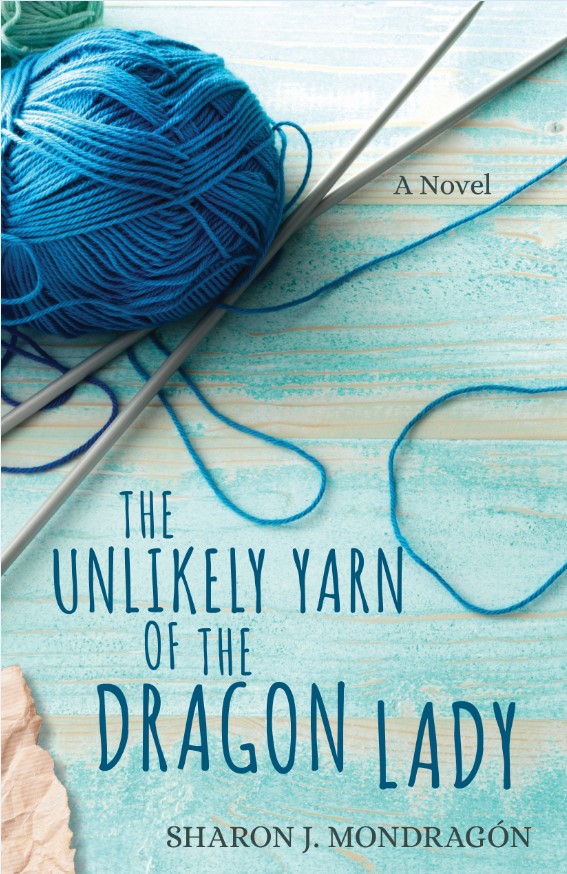
#SaturdaySpotlight is on Sharon J. Mondragón (@SJ_Mondragón) & The Unlikely Yarn of the Dragon Lady!

Good Morning Friends!

If you haven't checked out NN Light's Book Heaven's Audiobook Month Event, do so now as you're running out of time to enter the contest for a $75 Amazon Gift-Card! My Heart Weeps was featured yesterday. You can check it out HERE and/or just Enter the Contest HERE.

Today's guest visited us last month and shared some interesting insights on "The Secret of the Wrinkles." Today she's giving us a sneak peek into her book, The Unlikely Yarn of the Dragon Lady. So, please welcome Sharon J. Mondragón (@SJ_Mondragón) back! Take it away, Sharon....

A knitting group’s change of scenery changes lives in unexpected ways...

Margaret, Rose, Jane, and Fran had a good thing going: meet every week in the quiet of their peaceful chapel and knit prayer shawls. No muss, just ministry. That is, until their pastor boots them out of the church in his last-ditch effort to revive the dwindling congregation.

Uptight Margaret isn’t having it. Knitting prayer shawls where people can watch is the most ridiculous idea she’s ever heard of, and she’s heard plenty. Prayer belongs in the church, not out among the heathen masses. How are they supposed to knit holiness into these shawls if they’re constantly distracted by the public? But with no choice, the others embrace the challenge. They pack their knitting bags and drag Margaret—grumbling the whole way—to the mall with them. She can’t wait to prove them all wrong when it fails miserably, and show the pastor that she always knows best.

Without the familiar mold the group has been stuck in, their own losses, pain, and struggles rise to the surface. And the people and situations they encounter every time they try to sit quietly and knit are taking them a lot further out of their comfort zone than they ever imagined. Can they find the courage to tackle the increasing number of knotty issues they learn about in the community--or will the tangle be too much to unravel?

Sharon J. Mondragon’s debut is warm and delightful, full of real laughter, grief, and personality. It beautifully illustrates the power of women across generations to reach people for Christ.

Excerpt:

On the fateful Wednesday morning the final battle was engaged, Pete McIlhaney, rector of Hope of Glory Community Church, dressed himself with a sense of adventure and derring-do. He donned a black clerical shirt and white collar as though it were any other day. But then he pulled a black T- shirt with the words Father Knows Best in white lettering over his head—like a surplice over chain mail, he thought.

“Saint George had his dragon,” he encouraged himself as he thrust his arms through the sleeves. “And I have Margaret Benson!”

“Are you sure you want to wear that shirt?” his wife, Linda, asked him over breakfast a few minutes later. “She might take it as a challenge.”

Pete flashed her the boyish, lopsided grin he’d deployed to capture her heart nearly three decades earlier. “Bring it on!” He recklessly slathered an English muffin with far more jam than usual. “These are desperate times, my dear, and I’ve played it safe way too long. I know you think my idea is crazy, but it’s so crazy it just might work.” He’d delivered the movie quote with raised eyebrows and an Italian accent. “Besides,” he continued, suddenly serious and determined, “it’s time somebody stood up to Mrs. I-Run-Everything Benson before she runs this church right into oblivion!”

~~~~~

As the self- appointed head of the Heavenly Hugs Prayer Shawl Ministry, Margaret Benson arrived fifteen minutes early for the group’s weekly meeting in Hope of Glory’s Prayer Chapel—as usual. The blustery November day was cold enough to wear the fur coat Jim had given her for their thirtieth wedding anniversary, and she laid it carefully across a back pew. Then she strode to the front, where a vase with withered flowers sat on the intricately carved table that served as an altar. Sunlight filtered softly through the windows, highlighting the rich colors of the stained- glass depiction of the nativity. It also highlighted the motes floating languidly in the air. She ran her finger across the tabletop, then frowned at the trail it left in the dust. Really, how many times did she have to point out that the janitor was simply not doing his job when it came to the Prayer Chapel?

Margaret pulled a tissue from her pocket and fastidiously wiped the of ending dust from her finger. Then, vase in hand, she pushed through the double doors of the chapel and made her way to the kitchen of the parish hall, where she dumped the flowers into the trash can. She scrubbed out the vase in the sink, taking care not to splash water on her new wool suit. Then she placed the vase dry and spotless in the cabinet labeled Prayer Chapel and headed for the church office to tackle the problem of the dust in the chapel.

~~~~~

Lucille Brewster, church administrator and general Girl Friday for the rector, sighed as she heard the sharp approach of footsteps crossing the foyer. “Incoming,” she muttered under her breath. She made sure, however, that no trace of chagrin remained on her face by the time Margaret Benson, tall and regal and impeccably dressed in a royal- blue power suit and heels, appeared in the doorway of the church office. Lucille, in her workday slacks and sweater, felt hopelessly dowdy by comparison.

“Hello, Mrs. Benson. How are you this f ne morning?” Lucille hoped the answer would be Fine, thank you, but she wasn’t counting on it.

“Practically choking on the dust in the chapel. It’s disgraceful the way Bill neglects it. Would you please speak to him—again?”

“I’d be happy to.” Lucille resisted the urge to reply through gritted teeth. She could feel Mrs. Benson’s eyes on her as she jotted a brief note—Please dust Prayer Chapel—and then tucked it into the janitor’s internal mail slot.

“I could do that,” Margaret told her. “In fact, I have. Repeatedly, for all the good it’s done. He needs to be spoken to. Firmly.”

“I’ll mention it to Father Pete when he comes in.”

“Never mind. I’ll mention it to him after Prayer Shawl.”

Honestly, Lucille thought as Margaret Benson turned on her heel and headed toward the foyer, Father Pete has more than dust in the Prayer Chapel to deal with these days. If things don’t improve soon, there won’t be a Hope of Glory anymore, let alone a Prayer Chapel.

She reflected on the current situation. In January, the bishop had given them a new pastor and a year of grace. If the congregation continued to dwindle, however, the church was slated to close. The deadline loomed not much more than a month away. Lucille permitted herself a rueful smile and shake of the head, glad she wasn’t in Father Pete’s shoes today. His newest plan to try to resurrect Hope of Glory was bound to send Margaret Benson into a snit of epic proportions.


Sharon J. Mondragón writes about the place where kindness and courage meet. Her debut novel, The Unlikely Yarn of the Dragon Lady (originally titled The Heavenly Hugs Prayer Shawl Ministry) was the 2017 winner of the American Christian Fiction Writers Genesis award in the Short Novel Category, and she has also been recognized by The Saturday Evening Post where her short story, “I’ll Be Home for Christmas,” was an Honorable Mention Awardee in the 2014 their Great American Fiction Contest.

Mondragón has been active in prayer shawl ministry since 2008 and currently serves as facilitator for the prayer shawl ministry at her church, St. Paul Episcopal in Waxahachie, TX. She also knits with the Circle of Healing at Red Oak United Methodist Church. She is a Level 2 Certified Knitting Instructor through the Craft Yarn Council and teaches beginning knitting at a local yarn store.

Mondragón is the mother of five grown children and has four grandchildren. After 26 years as an Army wife, she has settled in Midlothian, TX with her hero/husband, her laptop, and her yarn stash.

Visit Sharon Mondragón’s website and blog at www.sharonjmondragon.com and follow her on Facebook (Sherry Mondragón) and Twitter (@SJ_Mondragón).

Get your copy of The Unlikely Yarn of the Dragon Lady at Amazon or ChristianBook(dot)com. Check out Sharon's previous visit to our blog HERE.

Hope you enjoyed this peek into Sharon's book, friends and that you'll check back weekly for another edition of Wednesday Words with Friends and Saturday Spotlight.

Until next time take care and God bless.
PamT
Saturday, June 18, 2022

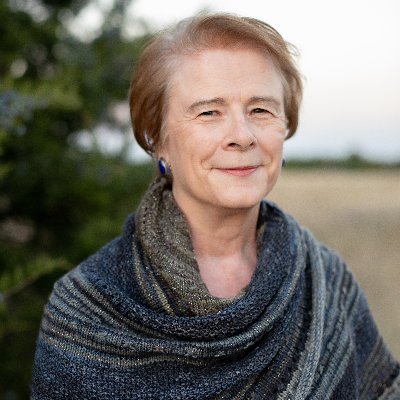
#SaturdaySpotlight is on Carolyn Miller @CarolynMAuthor & Midnight’s Budding Morrow!

Good Morning from Nacogdoches, TX!

I mentioned on Wednesday that I was headed here to be with my Angel Girl for SFA Orientation. We'll be heading back home in a bit but I'm SO very grateful to you for stopping by and supporting today's guest. Carolyn Miller is not new to our blog so I'm shining the spotlight light on her and her new book and stepping away.....

Can real love grow between a wallflower and an unrepentant rogue?

Sarah Drayton is eager to spend time with her best friend at her crumbling Northumberland castle estate. Matrimony is the last thing on her mind and the last thing she expects to be faced with on a holiday. Yet she finds herself being inveigled into a marriage of convenience with her friend’s rakish brother.

When James Langley returns to his family’s estate, he can’t be bothered to pay attention to his responsibilities as the heir. War is raging and he wants only distraction, not serious tethers. But his roguish ways have backed him into a corner, and he has little choice but to obey his father’s stunning decree: marry before returning to war, or else. Suddenly he finds himself wedded to a clever and capable woman he does not love.

Sarah craves love and a place to belong, neither of which James offered before returning to the battlefront. Now everyone around her thinks she married above her station, and they have no intention of rewarding her for such impertinence. It isn’t until her husband returns from war seemingly changed that she begins to hope they may find real happiness. But can she trust that this rake has truly reformed?

When tragedy strikes, this pair must learn to trust God and his plans. Will they be destroyed . . . or will they discover that even in the darkest depths of night, the morning still holds hope?

An EXCERPT was not available when Audra Jennings PR sent me the information for today's spotlight but you can get a peek into the novel HERE.

Get a copy of Midnight's Budding Morrow at Amazon or ChristianBook(dot)com.

Carolyn Miller is an inspirational romance author who lives in the beautiful Southern Highlands of New South Wales, Australia, with her husband and four children.
 
A longtime lover of romance, especially that of Jane Austen and Georgette Heyer’s Regency era, Carolyn holds a BA in English literature and loves drawing readers into fictional worlds that show the truth of God’s grace in our lives. She enjoys music, films, gardens, art, travel, and food.

Miller’s novels have won a number of RWA and ACFW contests. She is a member of American Christian Fiction Writers and Australasian Christian Writers. 
 
Learn more about Carolyn at www.carolynmillerauthor.com, or find her on Facebook (Carolyn Miller Author), Instagram (@CarolynMillerAuthor), and Twitter (@CarolynMAuthor).

Check out Carolyn's previous visits HERE

Thanks for sharing with us Carolyn! Wishing you the best of luck and God's blessings!

Until next time, take care and God bless, Friends!

PamT

Saturday, June 11, 2022

#SaturdaySpotlight is on Amanda Wen @AuthorAmandaWen & The Songs That Could Have Been!

Good Morning and Welcome!

June is trucking right along. We went to a Brooks & Dunn concert Thursday night and it was A-M-A-Z-I-N-G! I'll tell you all about it in my newsletter so sign up to receive it now! Meanwhile, let's put the spotlight on our guest, Amanda Wen and her book, The Songs That Could Have Been...

Two couples in love. Two sets of impossible circumstances. One powerful God of grace.

After a tailspin in her late teens, Lauren Anderson’s life is finally back on track. Her battle with bulimia is under control, her career is taking off, and she’s surrounded by a loving family. Then a chance meeting with Carter Douglas, her first love and the man who broke her heart, leads to old feelings returning with new strength. And suddenly her well-balanced world is thrown off kilter.

Now a TV meteorologist, Carter is determined to make amends with Lauren. After all, she still owns his heart. But the reasons they broke up aren’t lost--and those old demons are forcing him toward the same decision he faced in the past. He isn’t sure he’s courageous enough to make a different choice this time around.

When Lauren’s elderly grandmother, Rosie, begins having nightmares about a man named Ephraim—a name her family has never heard before—a fascinating and forbidden past love comes to light. As Lauren and Carter work to uncover the untold stories of Rosie’s past in 1950s Wichita, they embark on a journey of forgiveness and second chances that will change their lives—and Rosie’s—forever. Along the way they’ll learn that God wastes nothing, his timing is perfect, and nothing is beyond his grace and redemption.

The Songs That Could Have Been is full of the same deftly handled, resonant writing that readers and critics alike enjoyed in Amanda Wen’s first book in the series. Fans of Lisa Wingate and Rachel Hauck will add Amanda Wen to their must-read shelves.

The Songs That Could Have Been is book 2 in the Sedgwick County Chronicles and releases on June 21st so no excerpt is available at this time, but let's hear what others are saying about the book...

“There are so many brilliant moments in The Songs That Could Have Been. Amanda Wen took risks that paid off with a treasure trove of themes which will resonate in my heart for a very long time."
– Deborah Raney, author of Bridges and the Chandler Sisters Novels series

“Amanda Wen is a fresh new voice in the Christian fiction arena! Blending well researched historical events with modern-day, relatable characters, she crafts tales within tales that are guaranteed to delight and inspire readers. I highly recommend this inspiring writer.”– Kim Vogel Sawyer, best-selling author of Freedom's Song

“Readers will be swept off their feet by Amanda Wen’s second installment of the Sedgwick County Chronicles....Past and present are deftly woven together in this dual-timeline narrative that will leave readers flying through the pages. The Songs That Could Have Been is the ‘can’t miss’ book of the year.”
– Amanda Cox, author of the 2021 Christy Book of the Year, The Edge of Belonging

"As poignant as it is intricately crafted...this is a reading experience both heartfelt and heart-tugging, a timeless exploration of young and enduring love and the grace found in second chances. Amanda Wen is a rare and remarkable storyteller and this is a novel I will not soon forget." – Amanda Barratt, Christy Award-winning author of The White Rose Resists

Amanda Wen is an award-winning writer of inspirational romance and split-time women’s fiction. She has placed first in multiple writing contests, including the 2017 Indiana Golden Opportunity, the 2017 Phoenix Rattler, and the 2016 ACFW First Impressions contests. She was also a 2018 ACFW Genesis Contest finalist.
 
Wen is a member of American Christian Fiction Writers (ACFW) and regularly contributes author interviews for their Fiction Finder feature. She also frequently interviews authors for her blog and is a contributor to the God Is Love blog. She is the author of Roots of Wood and Stone and The Songs That Could Have Been.
 
In addition to her writing, Wen is an accomplished professional cellist and pianist who frequently performs with orchestras, chamber groups, and her church’s worship team. She serves as a choral accompanist as well. A lifelong denizen of the flatlands, Wen lives in Kansas with her patient, loving, and hilarious husband, their three adorable Wenlets, and a snuggly Siamese cat.
 
To find Amanda Wen’s blog and short stories, visit www.amandawen.com. Readers can also follower her on Facebook (@AuthorAmandaWen), Twitter (@AuthorAmandaWen), and Instagram (@authoramandawen).


Wow, Amanda The Songs That Could Have Been sounds like another amazing story! Thank you for sharing with us and we wish you the best of luck and God's blessings with it.

Hope you're looking forward to release day for this book, friends. You can pre-order it at Amazon or ChristianBook(dot)com! Read all about Roots of Wood and Stone from Amanda's previous posts HERE.

Until next week take care and God bless.
PamT

Saturday, May 28, 2022

#SaturdaySpotlight is on Crystal Caudill @crystalcaudillauthor & Counterfeit Love

Good Morning!

Well, grandson turned 13 yesterday and is headed to Disney in FL for a surprise trip. I'm back at Sam Rayburn lake until tomorrow so I'm not going to take any more of your time but will introduce today's guest....brand new to our blog, Chrystal Caudill with her debut novel, Counterfeit Love....

Can this undercover agent save the woman he loves—or is her heart as counterfeit as the money he’s been sent to track down?

After all that Grandfather has sacrificed to raise her, Theresa Plane owes it to him to save the family name--and that means clearing their debt with creditors before she marries Edward Greystone. But when one of the creditors’ threats leads her to stumble across a midnight meeting, she discovers that the money he owes isn’t all Grandfather was hiding. And the secrets he kept have now trapped Theresa in a life-threatening fight for her home—and the truth.

After months of undercover work, Secret Service operative Broderick Cosgrove is finally about to uncover the identity of the leader of a notorious counterfeiting ring. That moment of triumph turns to horror, however, when he finds undeniable proof that his former fiancé is connected. Can he really believe the woman he loved is a willing participant? Protecting Theresa and proving her innocence may destroy his career--but that’s better than failing her twice in one lifetime.

They must form a partnership, tentative though it is. But there’s no question they’re both still keeping secrets--and that lack of trust, along with the dangerous criminals out for their blood, threatens their hearts, their faith, and their very survival.

Combining rich history, danger, suspense, and romance, Crystal Caudill’s debut novel launches this new historical series with a bang. Fans of Elizabeth Camden, Michelle Griep, and Joanna Davidson Politano will be thrilled to find another author to follow!


Excerpt: December 31, 1883

“I don’t understand why we can’t marry sooner. Cincinnati doesn’t require your grandfather’s consent.” 

Not this topic again. Theresa sighed as her fiancé tilted the umbrella to shield her from falling sleet and helped her into the closed carriage. She’d spent weeks updating her seasons-old dress with a larger bustle and salvaged lace. Couldn’t they simply enjoy the New Year’s Eve Ball at Bellevue House and for one evening pretend all was right in the world?

“You know I want his blessing.” However, convincing her stubborn grandfather that Edward Greystone was a suitable match would take more time. Lots more.

“I don’t see why.” The carriage rocked as Edward squeezed into the cramped space. “The curmudgeon hardly gives you anything, much less his approval.”

“He’s a good man.” What other grandfather would sacrifice a beloved military career to raise a fourteen-year-old granddaughter? “And he’s all the family I have left. I need him as much as he needs me.” “You’re better off without him.” Edward turned sideways to allow his long legs room to stretch and speared her with a pointed look. “What did you pawn this week to pay his debts?”

She waved aside the answer as the carriage rolled forward. He didn’t need to know the elegant furniture from her parents’ bedroom had succumbed to her desperate need. One less creditor on their list of many made the sentimental loss worth it. She owed Grandfather everything within her power to help.

“Can we just enjoy the evening, please? I want 1884 to be the year life takes a turn for the better.”

“Then wed me tomorrow.” He clasped her hands and rubbed his thumb over the emerald engagement ring she wore inside her glove. “My work at the shipping docks may not afford us a mansion yet, but I can provide for you and save you from Colonel Plane’s downfall.”

Edward’s hopeful expression pricked her conscience. Grandfather would never approve of their marrying, no matter how long she tried to convince him. Edward’s vocal southern sympathies earned him no respect from the former Union colonel. Whatever Edward did to cultivate favor, he’d always be the enemy. Would Grandfather ever find any man acceptable? Broderick Cosgrove had shared most of her grandfather’s political views, but Grandfather had still objected to him. Of course, he’d been right about that match.

Unbidden, the image of her former fiancé’s smiling face filled her mind, and disappointment washed over her anew. She’d waited six years for Broderick to return with an explanation and a desire for reconciliation. Her foolish heart should know the truth by now. He was never coming back.

Edward, though, stayed by her side, whatever the hardship. He loved her. To delay their marriage bordered lunacy. Besides, where her head went, her heart eventually followed.

She smoothed Edward’s waxed mustache and offered a tentative smile. “I—”

The carriage halted, and voices rose.

“Stay here. I’ll check with the driver.” Edward reached for the door, but the handle jerked from his grip.

The smell of stale whiskey and cheap cigar filled the interior as a dark-haired vagrant forced his way inside, lobbying the barrel of a gun at them.

Edward lunged in front of her, blocking her view. “Get out.”

“Not ’til I get my money.”

Theresa sucked in a breath. No one forgot that raspy voice once they heard it, and she’d heard it coming from behind Grandfather’s closed office door more than once. Vincent Drake, the money monger, looked as villainous as his reputation.

“Over my dead body.” Edward, the brave fool.

“I can arrange that.”

Her heart skittered. “Move, Edward. Mr. Drake is Grandfather’s creditor.”

He didn’t shift.

The gun cocked. “I’d hate for the bullet to go through you and kill her.”

Edward eased next to her, fists clenched.

“Now, Miss Plane, where’s my money?”

“If you’ll speak to my gran—”

“Already did. All I got were excuses. I’ll not be put off again. A nice filly like you will make what’s owed me in a few nights on George Street.”

Edward lashed out with a growl, and the gun blasted.

Theresa "inched, and her ears shrilled as acrid smoke fogged the air and filled her lungs. She blinked at Drake’s smug smile, then swung her gaze to Edward. God, please, no. He was pressed against the side of the carriage, face pale, jaw slack, hand over chest. With breath held and fingers trembling, she pried away his hand. Nothing. No blood. No hole. Not even a tear.

“Consider yourself lucky. Next one won’t miss.” Drake gestured to the narrow space between her and Edward.

Theresa swallowed. A bullet-sized circle next to Edward’s head gave view to the dark, deserted street outside. Thank You, God. For once, He’d seen fit to intervene. Unfortunately, with the miserable weather and New Year celebrations, everyone remained indoors. No one would come to their aid, even if the driver dared to call for help.

“How much does my grandfather owe you?”

“Two hundred twenty.”

That much? “Perhaps we can make another arrangement.”

“Unless it involves money in my hand tonight, I think not.” Drake knocked on the carriage’s ceiling and called out “George Street!” The conveyance lurched into motion.

“Even if I had it to give, the banks are closed.”

“Not my problem.”

At the edge of her vision, Edward’s hands flexed. Any more heroic attempts, and he might not survive. She needed a plan of her own. Her gaze dropped to the bump beneath her glove and sparked an idea. It wouldn’t settle the debt, but it should help her negotiate payment for the remainder.

“Will you take a valuable item instead?”

Edward shot her a look, but he needn’t worry about his engagement ring. Praise God Lydia insisted on a literal funeral for Theresa’s past with Broderick. The ritual of burying both his engagement ring and her dreams in the ground next to her parents seemed childish a year ago, but now her novelist friend’s dramatic ways proved a godsend.

“I knew I did right comin’ to you.” Drake’s smirk sent shivers down her back as his gaze swept the length of her body. “Where is it?”

“Hidden.” She took a shaky breath. “In Spring Grove Cemetery.”

The place where her dreams met their death over and over again.

Please, God, not this time.

Crystal Caudill is the author of “dangerously good historical romance,” with her work garnering awards from Romance Writers of America and ACFW. Counterfeit Love is her debut published novel.

Caudill says that reading and writing are part of her soul and have been since she first held a crayon. While she considered writing to be an escape from challenges and struggles and a way to keep her sanity, Caudill would come to recognize that God used it as a teaching tool. “The stories came through my fingertips, but they were marked with His fingerprints,” she shares.

As she delved into history and crafted her own stories of hope through danger, Caudill would answer the call to pursue writing as a career after her first writer’s conference. “My stories are still filled with danger, struggle, and history, but they are also permeated with the hope and love of Christ. I hope they are dangerously good. Good for the heart and for the soul.”

She is a stay-at-home mom and caregiver, and when she isn’t writing, Caudill can be found playing board games with her family, drinking hot tea, or reading other great books at her home outside Cincinnati, Ohio.

Find out more at crystalcaudill.com or find her on Facebook (@crystalcaudillauthor) and Instagram (@crystalcaudillauthor). You can also join fellow readers in Crystal Caudill’s Reading Friends group on Facebook.

Counterfeit Love can be purchased at Amazon, Christianbook.com and other places Christian fiction can be found!

Sounds like a great story, Crystal, thanks for sharing! We certainly wish you the best of luck and God's blessings with your book and in all things.

Until next time, friends, take care and God Bless.

PamT

Wednesday, May 25, 2022

#WednesdayWordswithFriends Welcomes Sharon J. Mondragón (@SJ_Mondragón)!

Good Morning from Sam Rayburn Lake!

It's another rainy morning here. Monday was beautiful and we got some fishing in but yesterday and today is too windy and wet. But just getting away from the house is wonderful and restful after last week's craziness LOL! I brought Nora Roberts' Inn Boonsboro trilogy and have read 2 so far. The 3rd is scheduled for today. Reading these books reminds me of my visit to Boonsboro, MD which I shared here

'Nuf about me though, today's guest is brand new to our blog, brought to us by Audra Jennings PR so please give Sharon Mondragon a warm, W-E-L-C-O-M-E!


The Secrets of the Wrinkles

A few years ago, my granddaughter was having a conversation with an adult cousin about old people. The cousin commented that old people can be set in their ways, to which Marleigh replied, “They also hide secrets in their wrinkles.”

My first response to this was the awe and pride of a writerly grandma at the sheer poetry of Marleigh’s observation. Poetry lends itself to reflection and contemplation, teasing out the many and ever-deeper meanings of a particularly compelling line. As I’ve thought about this line over the last several years, it has become, for me, a call to action.

I’ve paid attention to the wrinkles in people’s faces since I was a young woman shopping in military commissaries. I was particularly interested in the faces of the retiree wives I encountered there. I could see how they had spent their lives by their wrinkles. I could tell, from the way deep lines had settled around their mouths, that some had spent their entire adult lives angry and displeased. Others had spent most of their lives smiling and laughing, if the lines at the corners of their eyes were any indication. Sometimes I would stop one of those women and tell her, “I hope I look like you when I’m old.” Those faces in which the lines had fallen in pleasant places reminded me to smile and laugh often, so I would look like them someday.

As I’ve aged, however, I’ve come to understand that there is more to this wrinkle thing than I thought. My life is now rich with experience: victories and defeats, joys and sorrows, confusion and aha moments, the perspective that only years of living can give. These lines in my face have stories to tell and wisdom to impart.  In our youth-oriented culture, “the wrinkle crowd” tends to be dismissed. Many of us can’t even text, much less tweet, so what in the world do we have to offer (besides babysitting the grandkids)?

And so, we hide all that we have learned about living in the wrinkles in our faces, from generations sorely in need of all we have concealed there. Some of us even try to hide the wrinkles with miracle creams and Botox injections, trying to appear as clueless and carefree as those who are younger. 

They may be clueless, but they are far from carefree. Young people these days are battling more anxiety than I ever remember feeling in my twenties. They don’t have the perspective of having lived through any number of difficulties and come out the other side, maybe battered, maybe bruised, but with a better idea of their strengths and weaknesses, of their mettle and their courage. This is where the wrinkle crowd comes in. We’ve already been through many of the things that worry them. We’re living proof that setbacks are not the end of the world and can even be the beginning of something new and wonderful that we might never have dreamed of otherwise.

We can come alongside, not to deliver the “when I was your age” lectures we gave our teenagers, but as a steady, praying, and reassuring presence that communicates, “Yes, this is hard. You’re not alone. I’m here. Let’s pray and see what God will do.”

When I was the middle-aged mother of a couple of troubled teens, the denizens of the early service at my church listened patiently to my tale of woe. They never turned a hair, no matter how wild the tale of my sons’ misbehavior. I could rest in their wrinkles long enough to think clearly. Steeped in their love and steadiness, I gathered the courage and wisdom I needed to address the situation, day after day, week after week.

We the Wrinkle Crowd have blazed the trail and our wrinkles are living proof that we’ve endured the scorching sun of adversity on the way. Let us not forget those who trudge behind us, but look back to see them, cheer them on, pray them over the rough terrain. Our wrinkles are a treasure map and it’s time we shared the secrets of how to find the riches of courage, patience, and faith.

Sharon J. Mondragón writes about the place where kindness and courage meet. Her debut novel, The Unlikely Yarn of the Dragon Lady (originally titled The Heavenly Hugs Prayer Shawl Ministry) was the 2017 winner of the American Christian Fiction Writers Genesis award in the Short Novel Category, and she has also been recognized by The Saturday Evening Post where her short story, “I’ll Be Home for Christmas,” was an Honorable Mention Awardee in the 2014 their Great American Fiction Contest.

Mondragón has been active in prayer shawl ministry since 2008 and currently serves as facilitator for the prayer shawl ministry at her church, St. Paul Episcopal in Waxahachie, TX. She also knits with the Circle of Healing at Red Oak United Methodist Church. She is a Level 2 Certified Knitting Instructor through the Craft Yarn Council and teaches beginning knitting at a local yarn store.

Mondragón is the mother of five grown children and has four grandchildren. After 26 years as an Army wife, she has settled in Midlothian, TX with her hero/husband, her laptop, and her yarn stash.

Visit Sharon Mondragón’s website and blog at www.sharonjmondragon.com and follow her on Facebook (Sherry Mondragón) and Twitter (@SJ_Mondragón).

Her debut novel, The Unlikely Yarn of the Dragon Lady is available at Amazon, ChristianBook.com and other places where great Christian fiction is sold.


Saturday, May 14, 2022

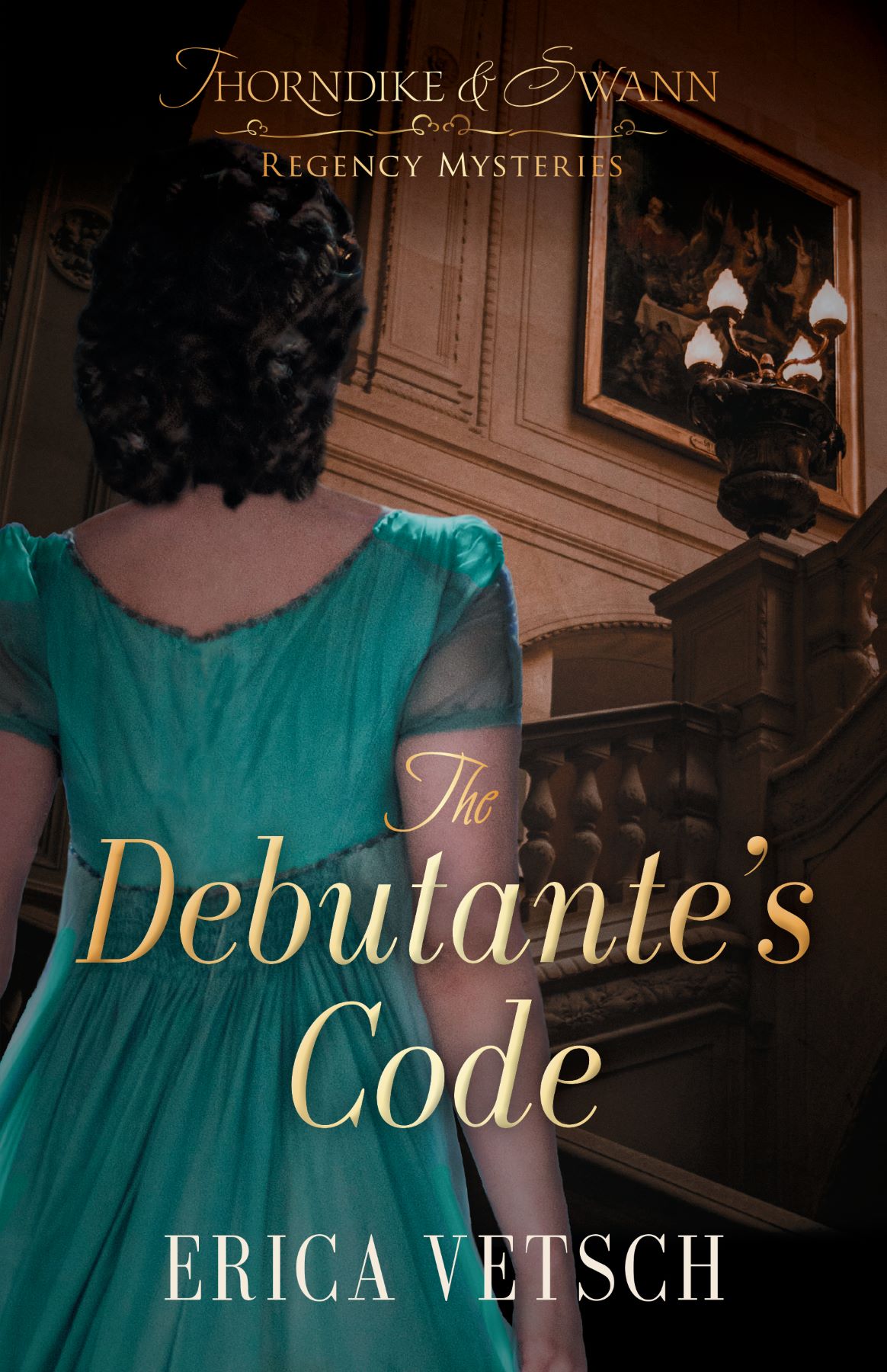
#SaturdaySpotlight is on Erica Vetsch The Debutante’s Code!

Good Morning Friends,

Graduation craziness begins tomorrow and runs thorough next Saturday so you won't hear much from me other than to announce today's guest, Erica Vetsch with her latest novel, The Debutante’s Code.

Take it away Erica....

Jane Austen meets Sherlock Holmes in this new Regency mystery series

Newly returned from finishing school, Lady Juliette Thorndike is ready to debut in London society. Due to her years away, she hasn’t spent much time with her parents, and sees them only as the flighty, dilettante couple the other nobles love. But when they disappear, she discovers she never really knew them at all. They’ve been living double lives as government spies--and they’re only the latest in a long history of espionage that is the family’s legacy.

Now Lady Juliette is determined to continue their work. Mentored by her uncle, she plunges into the dangerous world of spies. From the glittering ballrooms of London to the fox hunts, regattas, and soirees of country high society, she must chase down hidden clues, solve the mysterious code her parents left behind, and stay out of danger. All the while, she has to keep her endeavors a secret from her best friend and her suitors--not to mention the nosy, irritatingly handsome Bow Street runner, who suspects her of a daring theft.

Can Lady Juliette outwit her enemies and complete her parents’ last mission?

Excerpt: London Docks January 31, 1816

“If you lean out any farther, you’ll wind up in the drink. Which, I suppose, would be a fitting end to this disaster of a trip.” Lady Juliette Thorndike ducked her chin and turned away from the fresh breeze, the deck rocking gently under her feet. Her heart pounded beneath her woolen cloak as she reached the end of one journey and anticipated embarking on a wholly new one.

“I just want to be there. "e last twenty yards is taking longer than the entire voyage.” As always when in high emotion, Agatha Montgomery, Juliette’s best friend, used her adept skills in hyperbole. She leaned over the taffrail of the Adventuress as the ship eased into its berth, and her wide green eyes bounced from the wharf to the cranes to the warehouses. “I cannot believe we made it. I never want to endure a journey like this again.”

Nor did Juliette. Their trip from Switzerland to London had been fraught with delays and discomforts, putting them a fortnight behind their expected arrival date.

But now they were moments from stepping on their native heath. Her beloved England. She was finally home. Searching the quayside, she hoped to see a familiar face, but though people thronged the wharf, all were strangers. Not that she was completely au fait with the family she hoped would meet her, having been away from home for so long. She had completed her schooling and would within the hour be back in the embrace of her parents, ready to begin her new life.

Men shouted, Zinging ropes across the narrowing expanse of water, and with a jolting bump, the Adventuress docked. Juliette inhaled the scents of tar, hemp, wet wood, and smoke. The rigging creaked, and waves lapped against the pilings. Cold mist hung in the air, remnants of last night’s fog, no doubt. But the sun, weak as it was on this last day of January, hovered overhead as if determined to burn o! the dampness.

“Ladies, the gangway will be fixed soon, and your belongings will be the first off, as I promised.” The captain, a desiccated stick of a man with so many creases on his sea-weathered face it was difficult to make out his features, paused on his way forward. “If you’ll remain here out of the way, we’ll see you off right smart.” He touched his hat brim and sketched a small bow.

The Adventuress was a cargo ship, ill equipped for passengers, but the captain had made an exception for them in Genoa when they’d discovered their original vessel had sailed without them. The first mate had vacated his tiny cabin—albeit with poor grace—to accommodate the girls. Juliette had joked that the berth was so small, they had to go out into the corridor to change their minds.

“You do think someone will be here to greet us, don’t you? Even though we’re late and on the wrong ship?” Agatha’s brow puckered. She’d voiced the same concern throughout the journey.

“If no one is there to meet us, we’ll get ourselves home. We’re grown women now and certainly capable of getting from one side of London to the other.” Juliette raised her chin. “If we can live in a foreign country for years and travel alone from Switzerland to England, we can navigate the last short stretch.” Weariness dragged at her heart. It seemed she had been on her own for such a long time. She longed to be in the care of someone else for a while, to have her parents there to look after her, to help guide her in decision-making, to give her the feeling of home and comfort she had missed since the moment she’d left Heild House, their country estate in Worcestershire, for school seven long years ago.

“But we’re not supposed to be traveling on our own. That’s the problem. Our chaperone abandoning us partway to the port was a near disaster. What my father will say, I’m sure I don’t know. He paid good money for an escort, and look what happened.” Agatha’s mouth tightened, as it often did when speaking of her father. From her description he was a man of moods and given to expressing them boldly. His rare letters to his daughter over the years had been terse and more often than not dictated to his secretary at one of the mills he owned.

“He cannot blame either of us, and if he’s thinking at all, he should applaud our independence and bravery. Frau Hecht was not a good choice of chaperone, and I’m sure our parents will communicate their displeasure to the academy.” Frau Hecht and the three men hired to take the girls to the port city of Genoa and aboard the correct ship had been in league with one another. They had taken their fees and money for traveling expenses and then abandoned their charges in the city of Turin, forcing the girls to find their own way from there.

“Ladies.” The first mate, who always spoke as if clenching a mouthful of nails in his teeth, stuck out his arm, stiff as a spar, pointing to the gangway. There had been quite a set-to when the captain had agreed to take them on as passengers, led by the first mate. Something about women on a ship being bad luck? Tosh and twaddle. Juliette would be glad to see the back of him.

Holding her skirt with one hand and anchoring her hat with the other, Juliette made her way down the wooden slope that had no rails, her mouth in her throat until her feet touched the rimed cobbles of the wharf.

The sense of peace she had anticipated didn’t come. Instead, the anxiety that had dogged her every mile of the journey remained. There were still so many questions, so much to do until she could feel settled at home. Her parents had expected her to arrive a fortnight ago. They couldn’t know of all the troubles that had waylaid the girls. Had her parents come to the dock day after day hoping for her arrival, or had they dispatched someone to look for her?

Agatha bumped into Juliette’s back. “Your pardon. The stones are slippery.” She righted her bonnet. Lean and coltish, Agatha stood six inches taller than Juliette, and she constantly hunched her shoulders, keeping her head bowed in an effort to disguise her height. “Do you see anyone we know?”

Stevedores, teamsters, and sailors abounded. Bales, barrels, and bundles blocked anyone from walking in a straight path. “No.”

“What should we do?” Agatha clutched Juliette’s arm.

What indeed? Juliette had talked a good yarn about getting themselves across London, but how did one go about it? “We can inquire at the shipping office, I suppose. To see if our families have sent word or instructions.”

Which only left the small issue of finding the headquarters for the ship they had been scheduled to travel upon but which had left them behind when they didn’t arrive on time.

Before she could take a step, a long hand snaked out of the jostling crowd and latched onto her wrist. Startled, she jerked back, bundling into Agatha, who shrieked. Heads swiveled and bodies jostled, and Juliette whacked down on the clutching hand with an instinctive chop.

Erica Vetsch is a New York Times best-selling and ACFW Carol Award–winning author. She is a transplanted Kansan now living in Minnesota with her husband, who she claims is both her total opposite and soul mate.

Vetsch is the author of many novellas and novels, including the popular Serendipity & Secrets Regency series and the new Thorndike & Swann Regency Mystery series

Vetsch loves Jesus, history, romance, and sports. When she’s not writing fiction, she’s planning her next trip to a history museum and cheering on her Kansas Jayhawks and New Zealand All Blacks.

Learn more about Erica Vetsch and her books at www.ericavetsch.com. She can also be found on Facebook (@EricaVetschAuthor) and Instagram (@EricaVetsch).


The Debutante's Code can be purchased at Amazon, ChristianBook.com, and anywhere else great Christian fiction can be found!

Check out Erica's previous posts HERE.

Sounds like another great read for fans of Julie Klassen, Sarah Ladd, and Anne Perry!

See you next week for Wednesday Words with Friends and Saturday Spotlight!

Until then....take care and be blessed.
PamT

Wednesday, November 10, 2021

#WednesdayWordsWithFriends Welcomes Carolyn Miller!

Good Morning and Welcome!

Carolyn Miller was in our spotlight back in June with a peek into her latest novel, Dusk's Darkest Shores. Today she brings us the story behind the story. Take it away, Carolyn...

While most stories set in Regency England focus on the rich, the young, and the beautiful, award-winning author Carolyn Miller decided she wanted to give readers something different for a change. Her new Regency Wallflowers series follows the commoners, away from the hustle and bustle of 1810s London, out in the Lake District of England. The new trilogy begins with Dusk’s Darkest Shores (Kregel Publications/May 18, 2021/ISBN: 9780825446535/$15.99), which tells the story of a meek wallflower who finds herself helping a returning war hero whose dreams have been plunged into darkness.


Q: Please introduce us to your new Regency Wallflowers series, and specifically to your latest release, Dusk’s Darkest Shores.

After writing nine books in the Regency Brides trilogies, I wanted to focus on stories that were less about the rich, beautiful, and titled aristocracy and more about ordinary people. Specifically, I wanted to tell the stories of women who were slightly older and who were considered “wallflowers” or those with very few, if any, matrimonial prospects. I have found that Regency fiction is often populated by an amazing number of single, rich, young, and handsome dukes instead of these far more relatable women and situations. With the Napoleonic Wars having killed many young men in Regency times, it seems a fair assumption that not all women would have married, so I wanted this new series to focus a little more on what that would have been like, and the challenges a woman might have faced given these extremely limited circumstances.

For Mary Bloomfield, the heroine of Dusk’s Darkest Shores, she is crucially aware that her age and situation mean she is unlikely to wed. She helps her father, the local doctor, and is content with her lot in life, until Adam Edgerton, a local war hero, returns. He’s the victim of an insidious disease which has crippled his prospects. As Mary helps Adam fight to find a future, frustration and antipathy develop into friendship and esteem, then into something deeper. This story is set in England’s beautiful Lake District, and the setting as well as the social and medical challenges of that time make for fascinating reading—something I really enjoyed researching, and I’m sure readers will enjoy too.


Q: What drew you to write Regency fiction? What are some of the popular trademarks of stories set in the time period? 

I’ve been a fan of Jane Austen’s works for many years (decades!), and then my sister introduced me to Georgette Heyer, a British novelist whose books essentially established the Regency genre. Once I started reading Heyer, well, I knew I had found my niche. After writing several prize-winning contemporary romance stories, I was told that US publishers wouldn’t want them due to their Australian settings and characters, so I challenged myself to write a Pride and Prejudice–style novel, with some of Georgette Heyer’s wit, and an unapologetic faith thread. That first book drew a publisher’s attention and became The Elusive Miss Ellison, the first book in the Regency Brides: A Legacy of Grace series, which led to two more Regency Brides series.

Some of the hallmarks of Regency fiction include the focus on aristocracy and its trappings, such as the country estate and the town house, balls, and marrying for money versus marrying for love. Many of these books try to emulate Georgette Heyer’s witty dialogue, and focus on the importance of social behavior and its impact on society as much as on the details of gowns. It seems rare to find Regency fiction that focuses on the lives of the working classes or those for whom finances were not so easy to attain, probably because it doesn’t offer the glamour of a Mr. Darcy–type strolling around the hallowed halls of his magnificent Pemberley estate. Many of those Jane Austen–style romances lead people into a fantasy of life in the Regency era. While I’ve written my share of fairy-tale-type fiction, I like to write stories that present relatable people with realistic challenges, woven with faith, love, and humor.


Q: Tell us more about England’s Lake District in the 1810s. What was life like for women especially?

Like many places of this time, the Lake District in the north of England was suffering the effects of many of its men being involved in war, which severely impacted the small villages and rural farming communities. These sheep-tending communities saw the women take on roles that perhaps were not considered as usual when the men were around and able to fulfil their farming and regular duties.

For many women in this time period, their lives were certainly not focused on the latest fashions from London but rather on ensuring they had enough food to feed their families by whatever means possible. Families might grow some of their own food, but many women had to turn their hand to whatever they could to make ends meet. It was a hard life, a very practical life, with little room for whims and fancies, especially for those in the middle and lower classes. That is why village functions such as dances were considered the ultimate in entertainment. Women were often at the beck and call of their family and social obligations, with little room for indulging the softer emotions, let alone the luxury of falling in love.

Q: Can you tell us more about your leading lady, Mary Bloomfield, who is quite self-sufficient and, in some ways, independent?

As the daughter of the local doctor, Mary Bloomfield is put into situations that many “proper” young women would never be exposed to. But as her practical, no-nonsense father values her commonsense and useful ways, she is placed in circumstances most unusual for a woman. This includes the preparation and mixing of medicines, as well as the care of patients that leads her to adopt far more independent conduct than most other women her age and younger.

Mary is naturally compassionate; her older age, steady temperament, and caring nature mean she is well respected in the community, allowing her some degree of leeway from the usual social expectations. Like Elizabeth Bennet, she is partial to an unchaperoned stroll, although Mary always has a purpose, such as visiting a sick neighbor, and usually has her basket on hand (filled with medicine or supplies).


Q: What are Mary’s views on marriage? Does being past “marriable age” bother her?

In Regency times, many women were thought to be “left on the shelf” if they remained unwed many years past twenty. Mary is wryly aware of her lack of marriageability, especially as she is older and is considered less attractive than other single ladies in the village. She has accepted her lot in life, is content, and has quite given up any notions of romance.

She does not allow this to bother her, instead busying herself in good works, helping her father with his work, visiting the sick in their community, and helping to care for them in the little cottage infirmary that is part of their house. She’d rather use her time for the benefit of others than wistfully daydream on what she knows can never be.


Q: The Bloomfield sisters at first appear to have many differences but are more alike in some ways than they would ever like to admit. Can you tell us a little bit about the sisters and how they butt heads?

Mary’s own mother died when she was very young, so when her father remarries and another daughter is born many years younger than Mary, it is not surprising that they don’t always see eye to eye. Joanna Bloomfield seems to be somewhat spoiled and focused on flirting and fashion. Mary is keen to encourage her sister to think of how her time could be spent more productively—which is not always well received. One of their chief challenges concerns how Joanna treats her would-be suitor, and they also clash over Joanna’s friend Emily and the advice Mary offers her when Emily’s injured sweetheart returns from war. 

Deep down, Joanna has a moral compass almost as strong as Mary’s own, and she is equally candid in her assessment of what she perceives as Mary’s shortcomings. But she is also loyal and loving, and doesn’t hesitate to step beyond the realm of propriety to interfere when it seems as if Mary is about to lose it all. I enjoy writing stories about sisters, having a sister of my own and two daughters. It’s the ups and downs of such relationships that readers have responded to so well, especially in sister-based series such as Regency Brides: Daughters of Aynsley. I’m sure readers will connect warmly with these sisters in Dusk’s Darkest Shores, too.


Q: How does Mary’s faith play a role in her daily life? What kind of spiritual promptings does she receive?

Mary is a Christian, someone who tries to follow what Jesus says in her daily life and practice rather than merely offering lip service and an appearance in church each Sunday. She wrestles with her faith, believing far more than what the church edicts allow for, especially in things pertaining to healing and the like.

Mary prays, pauses to listen for a response, and is quick to follow those inner urges to do certain things, such as visit a particular villager or pray for someone. She is conscious that the Holy Spirit has used her to see others healed in the past, and this has built confidence that God will use her in this way again. I love the fact that I can use fiction to talk about some very true things, and some of the incidents mentioned in this book reflect the healings my husband and I have seen in our ministry work.


Q: Adam Edgerton comes back from the war with an illness that has changed his life. What challenges would someone in Adam’s situation face in 1811?

For the men who fought during the Napoleonic Wars, there were many diseases that could fell more soldiers than bullets would. Flushing sickness, or Walcheren fever, was one of those illnesses. Very little was known about it at the time, given that it held similar characteristics to malaria, typhoid, and typhus. The lack of medical knowledge meant there was a lack of medical assistance to be offered, leading to thousands of men dying from disease rather than war. Some of these men who recovered enough were then sent from the Netherlands to fight in Portugal, while others were forced to return to England, where they continued to be plagued by fevers which gradually weakened many of the men and led to early graves.

For soldiers like Adam, who were used to being strong, healthy, and independent, being forced to become dependent on others would have felt humbling. To lose one’s hope is one of the most devastating things in life, and for returned soldiers who could not fulfill the roles they always imagined themselves doing, it was traumatic. How could one provide for a family if you could not keep a job? In 1811, obviously the social and financial situations of families and individuals were not supported by a form of social security, so it became very necessary to rely on the support of one’s neighbors and the church. For men returning from war who were facing physical, mental, and emotional challenges, their transition back into a peaceful community would have been most trying. Not only were they facing the impact of illness and injury on their own lives but also on their families, including such things as the future legacy of a farm that had existed in the family for generations. 


Q: Mary’s father is the town doctor who treats Adam. Can you tell us more about the medical treatments of the day and what kind of training doctors would have? How much research did you have to do in regard to that part of the story?

In Regency times there were a number of ranks of medical professionals. A surgeon was often apprenticed to an older doctor, learning on the job to eventually attain a role equivalent to our modern-day general practitioners. An apothecary is like our modern-day pharmacist, and they mixed herbs and the like to create medicines to be sold to the public. A physician underwent the most training of all and was skilled in such things as anatomy, physiology, and surgery, and had experience in hospitals. Some of the best hospitals for training included Guy’s Hospital in London (where poet John Keats studied) and Edinburgh, where Mary’s father trained.

Medical treatments in the Regency era varied, as did their effectiveness. Doctors might not receive a great deal of formal education, but they could be well versed in the use of folk remedies and practices that had proved themselves in the past. Without anesthesia, antiseptics, or antibiotics, doctors used a blend of observation, experience, and whatever training they had to diagnose and treat patients. I found The Complete Herbal by Nicholas Culpeper to be extremely helpful in understanding some of the treatments of the day, such as the use of flowers like feverfew in reducing inflammation and temperature. Reading some of the journals, letters, and medical accounts of those suffering from Walcheren fever were invaluable in understanding more about the disease. It was really interesting to weave Regency-appropriate medical knowledge and treatments into this story, and to detail the making of some of the medicines.


Q: Due to his condition, Adam finds himself in some dark places, in more ways than one. What does he struggle with spiritually?

One of the biggest questions a person can face when confronted with challenging circumstances is “Why is this happening to me?” Linked to this is the question of purpose, and when one’s purpose seems to be ripped away, the question becomes, “Who am I anymore?” Adam always thought he’d be a certain type of person and have a certain kind of life, and when the consequences of war affect this, he’s forced to confront these questions of purpose and lost hope.

Connected to this is his challenge to trust God when he feels like God has failed him. It takes time for him to realize that God has placed people in his life who can help him envisage a new future, learn to trust God (and those people), and understand that God’s ways and a future entrusted to Him can lead to a life so much greater than what we can know or understand.


Q: How does the relationship between Mary and Adam evolve from nurse and patient to friends?

Mary is no simpering, fainthearted miss—she might appear meek to some people, but she is well able to speak honestly and with bluntness. Adam needs someone like Mary to speak the truth others are too afraid to, and he reluctantly starts to appreciate the fact that she doesn’t tiptoe around him. Her ability to help him almost like a modern-day physical therapist means they spend a great deal of time together. He soon learns to value her wry humor and kind ways, and he discovers that the things he once thought important were less than necessary after all. They ultimately are a great match of wit, intelligence, faith, and others-focused service, which deepens their friendship into esteem and then love.

I enjoyed writing and developing these scenes, and have had early readers and endorsers write to me to say they found the final scenes of Dusk’s Darkest Shores to be among the most romantic they have read, so I hope other readers enjoy this too.


Q: Without sharing too much, what kind of scandal do Mary and Adam find themselves in?

In Regency times it was considered somewhat scandalous for a single man and woman to spend time alone together. Even writing a letter to a single gentleman or lady would raise eyebrows! So, when one of Mary’s training sessions goes awry, they are forced to explain themselves in the only socially acceptable way possible—for which Mary does not wish to oblige.

Older, wiser, and already aware that she is “on the shelf,” Mary is unwilling to bow to social expectations and accept the role her small-minded village neighbors think she now must play. She has now realized that she does not want scandal or the opinions of others to influence the rest of her life, and she is willing to pay the price, heartbreaking as that might be. It was really good to write a story of an empowered woman, someone who stood against the societal flow and made her own choices, given that wasn’t an option for many women at that time at all.


Q: What can readers expect as the Regency Wallflowers series continues? What else can your readers look forward to later this year?

I’ve really loved turning the focus from aristocratic foibles to those situations and people that are far more relatable. Next year sees the release of Midnight’s Budding Morrow, a Gothic-inspired romance set in a crumbling castle by the sea in Northumberland, which delves into matters of belonging, acceptance, and family. The following year sees the release of Dawn’s Untrodden Green, which sees a very different Regency wallflower encounter someone who may change her mind about marriage, in a book I consider to be one of my most humorous yet.

Later this year, I’m launching two more contemporary releases as part of the Independence Islands series, Regaining Mercy (about what happens when a failed reality TV star returns to her narrow-minded community) and Restoring Hope  (which asks whether opposites who attract can ever really last). Just in time for New Year’s, I have another contemporary romance releasing, The Break Up Project, the first in the Original Six series, set in Boston and involving a preschool teacher and a hockey player.

Lots of happy reading ahead!


Learn more about Carolyn at www.carolynmillerauthor.com, or find her on Facebook (Carolyn Miller Author)Instagram (@CarolynMillerAuthor), and Twitter (@CarolynMAuthor)


Hope you enjoyed Carolyn's interview as much as I have, friends and that you'll check back weekly for more Wednesday Words with Friends and another Saturday Spotlight. 

Until next time, take care and God bless.

PamT